How to control understeer and oversteer skids in your car
Controlling a skid is something most drivers don't have to do often, but understanding understeer and oversteer is useful all the same

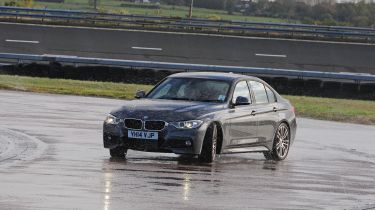
With winter now firmly upon us, some poor weather is unavoidable. This means drivers are going to have to be on the lookout for hazards such as black ice or standing water, which can cause a sudden loss of control over a car.
Such a loss of control will manifest itself as a slide, which will then develop into either oversteer or understeer, depending on a variety of factors, including the type of car being driven, how it’s being steered, and how much the throttle and brakes are being used.
If you do find yourself behind the wheel of a car going into a skid, you’re either going to have to deal with understeer or oversteer. The former is the more common and easier of the two to handle, but the latter can still be controlled. We explain how to deal with both below.

Above all else, it’s important to remain calm if you feel you’re starting to lose control of your car – panicking will just increase the chance of an accident. Even if an accident is unavoidable, there will still be mitigating action you can take.
Be sure to look as far ahead down the road as possible, taking note of any potential hazards along the way. Also, pay close attention to what the front wheels of your car are doing through the steering wheel, this is how you monitor whether all is well or if something has gone wrong.
With so much misleading information out there on social media and internet forums, it is important to rely on sources you know you can trust. With years of driving expertise under our belts in all kinds of cars and weather conditions our team can give you the advice to help you stay safe on the road.
What’s the difference between oversteer and understeer?
Both understeer and oversteer describe a loss of grip while cornering, but they affect different ends of the car and feel very different from behind the wheel.
Understeer
Understeer happens when the front tyres lose grip before the rear tyres. When this happens, the car turns less than you expect and pushes wide towards the outside of a corner, even if you’ve applied significant steering lock. From behind the wheel, it can feel as though the car is continuing to plough straight on despite your steering inputs, which can be especially unsettling on a left-hand bend when you’re close to oncoming traffic.
Oversteer
Oversteer, on the other hand, occurs when the rear tyres lose grip before the front tyres. In this situation, the car turns more than you intend, with the rear of the car swinging outwards and attempting to overtake the front. This can feel as though the car is beginning to spin.
Oversteer is most commonly associated with rear-wheel-drive cars and can be caused by poor weather conditions, applying too much power when exiting a corner, or sudden weight transfer through braking or lifting off the throttle.
In simple terms, understeer feels like the car won’t turn, while oversteer feels like it’s turning too much.
What to do when your car understeers
Understeer is caused when the front wheels of a car slip on the road surface while the rears still have grip. It usually occurs when you carry too much speed into a corner, and when you go to apply steering lock, the car wants to continue straight ahead, rather than following the direction of the front wheels around the corner.
When this happens, it can be quite unnerving, and your immediate reaction will probably be to apply more steering or slam on the brakes, but that won’t necessarily work. The best way to correct understeer is to follow these steps:
- Lift off the accelerator, do not slam on the brakes; simply reduce speed to allow the front wheels to regain grip, and lightly apply the brakes if needed.
- Ease off the steering slightly, straightening the front wheels and allowing them to grip the road again.
- Once you can feel that the wheels have grip, smoothly reapply the steering so the car begins to turn back towards the flow of the road.
- If the understeer persists, continue reducing speed gradually before trying to steer again.
- Keep calm and look ahead to where you want the car to go, not at the potential hazard.
More often than not, if you follow these steps, you can regain control of your car when it starts to understeer.
What to do when your car oversteers
Oversteer affects the rear wheels and can be quite panic-inducing when it happens. There are two main types to be aware of. The first usually occurs under braking, when the car’s weight shifts forward and allows the rear wheels to become light, thus losing grip. If you are steering at the time, the momentum can cause the back of the car to shift around like a pendulum.

The second type of oversteer usually happens when the driver uses too much power, too early when coming out of a corner. The excess power causes the rear wheels to lose traction, which then makes the back of the car slide out.
The key to correcting both types of oversteer is to remain calm. Panicking or slamming on the brakes will only cause more issues. If you ever find yourself in either of these situations, these step-by-step instructions should help you come away safely:
If oversteer happens while braking into a corner
- Smoothly steer in the direction of the skid, turning the wheel in the same direction that the car is sliding.
- Avoid braking suddenly, as this will make the rear spin round faster.
- Apply a gentle and steady throttle to help settle the rear wheels.
- Look in the direction you want the car to travel rather than at the potential hazard.
- Once you have regained some grip, reduce the steering gradually and the car should begin to straighten.
If oversteer happens while accelerating out of a corner
- Ease off the accelerator smoothly, avoiding sudden lifting or stamping on the pedal, as either action could make the back end snap round and do more harm than good.
- Steer into the skid to keep the car heading in the intended direction.
- Avoid sharp braking or sharp steering, as this can worsen the slide.
- Continue to adjust the steering until the car starts to become stable.
- Keep your eyes focused on the road ahead rather than on any obstacles.
- Once the car is stable again, gently apply the accelerator to continue on your way.
How do modern driving aids affect oversteer and understeer?
Most modern cars are packed full of driving aids designed to help keep you safe. Some of these systems have been created specifically with understeer and oversteer in mind, aiming to prevent or reduce a loss of grip before the driver even realises it has happened.
ESC
Electronic stability control (ESC) is arguably the most important of these systems. It constantly monitors steering angle, wheel speed and the movement of the car, and if it senses something is wrong, it can automatically apply the brakes or reduce engine power to help keep the car on the road. In many situations, ESC will correct a loss of grip before it develops into something more significant.
Traction control
Another useful feature is traction control. This helps limit wheelspin during acceleration, which is particularly useful when pulling away or exiting corners on slippery roads. By preventing excessive power from reaching the road, it can reduce the likelihood of unwanted skids.
ABS
If something does go wrong, most of us will instinctively go for the brakes to try and avoid an accident, and that is where the anti-lock braking system (ABS) comes in. This prevents the wheels from locking up under heavy braking, allowing the driver to maintain some steering control even when braking hard.
In practice, it can feel like the brakes are juddering, but this is the system rapidly releasing and reapplying braking force to stop the wheels from locking completely. While ABS will not stop a skid on its own, it can help the driver steer around hazards instead of sliding straight into them.
It is important to remember that these systems have their limits. On ice, snow or standing water, grip can be lost more quickly than some of these systems can react and there may simply be no grip available. For this reason, no driver should ever rely solely on electronics to save them, and in poor conditions there is no substitute for cautious driving and reducing speed.
What are your top tips for driving in winter weather? Let us know in the comments section below...
Best winter cars
| • Best electric SUVs to buy now | • Best SUVs to buy now |
| • Best crossovers to buy now | • Best small 4x4s to buy now |